Noooooo Canada

After weeks of waiting, it’s finally here… Matt Canada Firing Day!

For those who don’t follow football, Matt Canada was, until today, the offensive coordinator for the Pittsburgh Steelers. His passing offense — if you can even call it that — has been one of the least imaginative, most conservative in the league. There are almost zero deep passes, and even most of the short passes are to the sidelines; it’s almost like he’s allergic to the middle of the field. If that’s not easy enough to gameplan against, he also runs a bunch of slow-developing plays — bubble screens, jet sweeps — that get broken up behind the line of scrimmage for a loss. To be fair, the bread-and-butter running game has been fairly competent, but in today’s NFL, if ALL you do is run the football, you don’t go very far. We’re light-years removed from the “three yards and a cloud of dust” game of years past.

If you want to put some stats to it: the Steelers were 28th in both points and total yards during Canada’s tenure, and NEVER had a 400-yard offensive performance. In 2023 in particular, they’ve been outgained offensively in EVERY game they played. (Yet, they’re somehow still 6-4… which is a bit of a minor miracle, honestly.)

In short, Canada has widely been viewed amongst Steeler Nation as sucking at his job, pretty much since the day he was hired. But he had thus far managed to escape much in the way of accountability. In 2021, it was “Ben Roethlisberger no longer has the arm to throw deep, so they have to manage the playbook to what he’s capable of”. In 2022, it was “Kenny Pickett is a rookie, they’re easing him into things”. But now, in 2023, there’s no more built-in excuses and the offense looks as bad as ever… maybe even worse. And so today, the axe finally fell.

Now, I’m not going to pretend Matt Canada was the ONLY problem with this team. Kenny Pickett, the aforementioned quarterback, has been maddeningly inconsistent since being handed the starting job. Enough so that there are doubts creeping in over whether he can really be the franchise QB they hoped they were drafting. Maybe it’s not a fair comparison, but C.J. Stroud managed to hit the ground running this year, and it’s not clear the Texans’ personnel at the other 10 offensive positions are any better than the Steelers’. Sometimes QB’s have the “it” factor; sometimes they don’t.

Speaking of those other positions, they’re not immune from criticism either. The offensive line has had its ups and downs as well: they had a lot of turnover of personnel over the last few years and the charitable explanation is they’re still meshing; the less-charitable explanation is they signed the wrong guys. They’ve also struggled to find good wide receivers ever since Antonio Brown’s departure. Diontae Johnson puts up superficially good numbers and is certainly a success for a 3rd-rounder, but seems to disappear in big moments; George Pickens is a physical freak, but has a tendency to sulk and check out if his number’s not getting called. Calvin Austin has intriguing speed and elusiveness in the slot, but he also lost his entire rookie year to injury, so he’s still in learning mode. Allen Robinson… exists. So some of this is a personnel issue as much as a coaching one.

(The sole bright spot has been the emergence of running back Jaylen Warren. He’s a 5’8″ undrafted free agent, his physical tools don’t really leap out, but when he gets running north-south, he’s like a cannonball out there. And his stiff-arms are becoming the stuff of legend.)

But it starts with an offense gameplan that has been both predictable and unimaginative. Every. Single. Week. You can’t run an NFL offense when the opposing team knows your entire offense runs within 5 yards of the line of scrimmage. When a fairly team-first guy like Najee Harris admits to a locker room full of reporters that opposing teams pretty much know what’s coming… a new coordinator is probably the first and easiest thing you can do to try and fix it.

Among other things, they had to do it for the sake of the defense. The Steelers’ defense is actually pretty good this year, and T.J. Watt is a generational talent that they just signed to a huge contract. Since a 30-7 loss to the Texans back in Week 4, they haven’t allowed more than 19 points to an opponent. That should be enough to win football games in today’s NFL… if you can couple them to an offense that doesn’t three-and-out almost every possession. The Steel Curtain Steelers of the 70s would’ve struggled if their offense could never get them off the field for a breather.

As tenuous as their position in the standings is, they also had to do it for the standings. They’re still at 6-4, and there’s a few traditionally good teams having down years — Buffalo just fired THEIR offensive coordinator; Cincinnati just lost quarterback Joe Burrow for the year. The playoffs aren’t unrealistic if they can get the offense to play slightly better. Super Bowl? OK, probably not. But you gotta try, right? “Any given Sunday?”

Lastly, I’d argue they had to do it to force an honest reckoning regarding Pickett. Right now there’s this debate over how much of the offensive struggles were Canada’s offense, and how much were just that Pickett isn’t that good. In fact, I think a lot of the fanbase WANTS it to be Canada’s fault so they don’t have to reckon with the possibility we have to go back to the drawing board at quarterback. Admittedly, that’s probably a deeper dive than I wanted to do here, but it’s a question that needs to be resolved. And next year is going to be a deep draft for quarterbacks, so there’s a bit of a feeling that if Pickett ISN’T the guy, 2024 would be a good time to draft some competition at the position. If pushing Canada out the airlock is what creates the conditions for really scrutinizing Pickett’s strengths and weaknesses, that’s probably a net positive as well.

The only problem with all of this is that it’s pretty hard to make sweeping changes mid-season, especially when you’re mostly doing it with the same personnel that are already in place. Maybe they can go get a splashy outside hire in the offseason, but for now the Steelers already announced that running backs coach Eddie Faulkner will be the interim OC with QB coach Mike Sullivan as the play-caller. So maybe those two are sitting on a treasure-trove of plays they’re just dying to call (in my head-canon, I’ve already decided it’s a vintage Trapper Keeper labeled PLAYS MATT CANADA WOULDN’T LET ME RUN), but chances are it will look more like incremental tweaks to what already exists.

But all of that is for down the road. Today, the fans got what they wanted. Even if there’s a little undercurrent of “be careful what you wish for, you just might get it”.
The Next Great Japanese Import

Even if you’re not much of a baseball fan, you’ve probably heard of Shohei Ohtani — one of the best batters in baseball, one of the best pitchers in baseball (though he’s recovering from an injury), and the ONLY guy who’s been doing both at a high level. And six years into his MLB career, probably the best baseball player ever to come over from Japan.

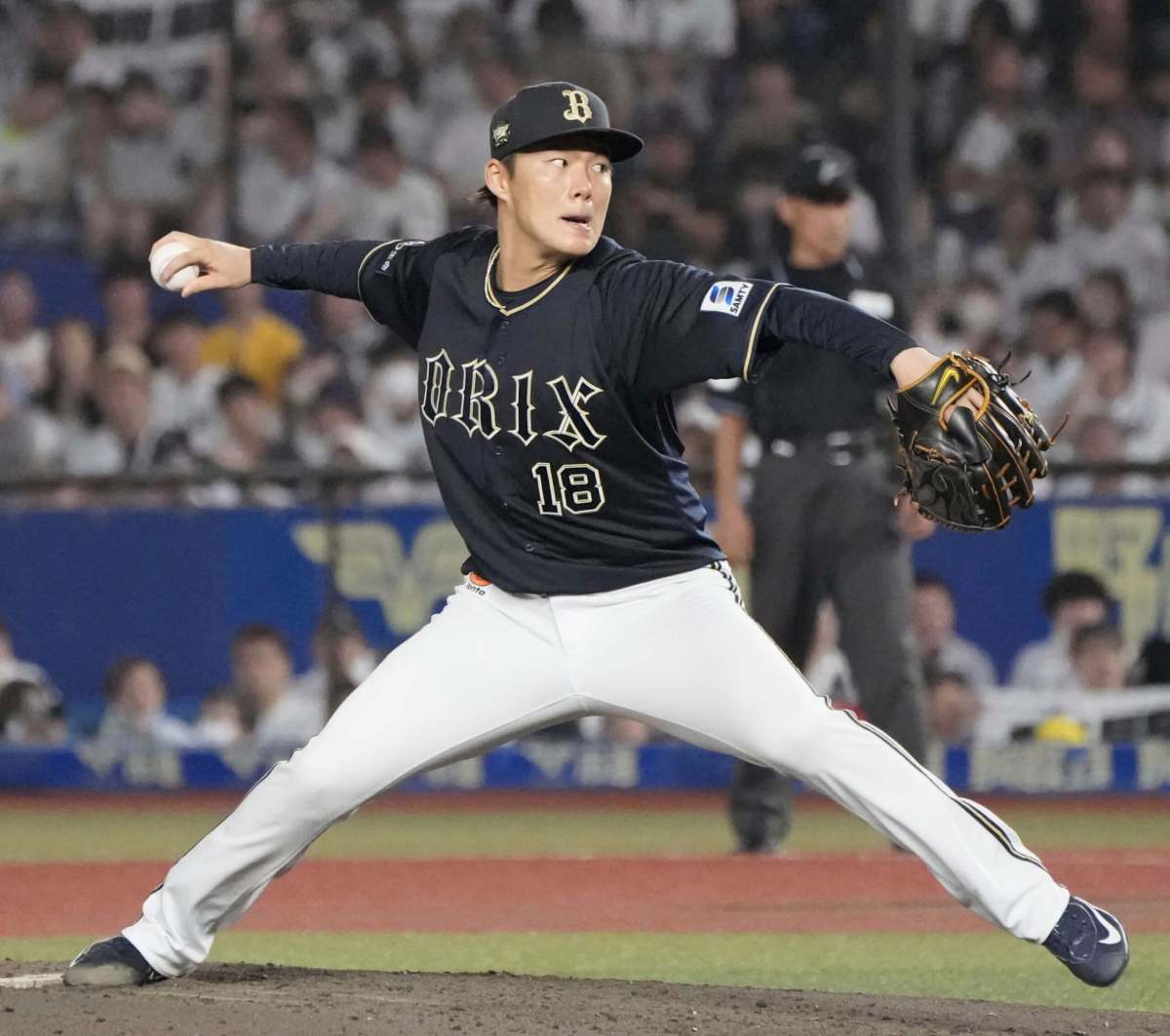
Well, tomorrow, the bidding war begins for the next big thing from Japan. Get ready to hear a lot of talk about Yoshinobu Yamamoto.

To be fair, he’s not the “next Ohtani” because he’s “just” a pitcher; as far as we know, he’s nothing special with a bat. But calling Yamamoto “just a pitcher” is like saying Beethoven “wrote a few tunes”.

In fact, Yamamoto has been far and away the best starting pitcher in Japanese baseball the past three years running. Consider these numbers that look like something out of a videogame:

  • 2021 – 18-5, 1.39 ERA. 193.2 innings, 124 hits, 40 walks, 206 strikeouts.
  • 2022 – 15-5, 1.68 ERA. 193 innings, 137 hits, 42 walks, 205 strikeouts.
  • 2023 – 17-6, 1.13 ERA, 171 innings, 119 hits, 28 walks, 176 strikeouts.

Each of those seasons won Yamamoto both the Triple Crown (leading the league in ERA, wins, and strikeouts) and the Sawamura Award (the equivalent of the Cy Young Award). He’s also had 5 All-Star appearances, 2 MVP awards, 2 Gold Gloves, and he’s also thrown two no-hitters. And if you want a little extra, he held his own at the World Baseball Classic earlier this year as well, against some of the world’s best players.

And the best part… Yamamoto only just turned 25 in August, so theoretically he’s still got some of his best baseball ahead of him.

But that means we need to talk about “the posting system”. In order to keep the peace between MLB and Nippon Professional Baseball (NPB — the Japanese major leagues) and keep MLB from using their deep pockets to sign players at will, there’s a formal system for allowing players to come over. If an NPB player who hasn’t reached free agency yet wants to come to MLB, he has to seek his team’s permission to leave, and if the team agrees they “post” his rights for MLB teams to bid on. There’s a negotiation period of 45 days, after which the player signs with an MLB team, and the Japanese team that owned the player’s rights (in this case, the Orix Buffaloes) would get a one-time payment for releasing him. If no one signs the player (obviously not a concern for Yamamoto, but has happened for some lesser players), they can return to their NPB team with no harm done.

(A little bit of history, Until 2018, it used to be the rights auction would come first — the MLB teams would submit bids to the Japanese team for the right to negotiate with the player, and ONLY the team that won that auction would be eligible to sign the player. So the player didn’t really have full free agency; they basically got told which MLB team they would be allowed to play for. One side effect was this gave the MLB team all the leverage when negotiating a contract because the player’s only Plan B was staying in Japan for another year. As of 2018 they changed the system to give the players more negotiating power — the player can now negotiate freely with any/all MLB teams, and the posting fee is merely a percentage of the contract he actually signs for.)

So let’s put some estimated numbers to it. To keep the math simple, let’s say Yamamoto signs for $200M total (it’s the total value of the whole contract, so if he signs a 6 or 7 year deal, that’s easily possible). The posting fee is 20% of the first 25M ($5M), 17.5% of the second 25M ($3.75M), and 15% of everything over $50M ($22M in this case). So on a $200M contract… over 5+ years, that could happen… the posting fee to Orix would be $31.875M. So you can see why even though Orix would probably love to keep Yamamoto, they probably wouldn’t mind $30M+ in their bank account either. Especially not when he’s a seven-year veteran and would be eligible to leave as a free agent in a few years anyway.

So what’s team get for that money? Yamamoto’s fastball sits pretty comfortably around 95mph, but he can pump a few extra clicks when he has to. He also has a curve and a split-finger fastball. He throws all three with better-than-average control. He technically has a slider as well which he hasn’t used much, but some people suggest he might start leaning on it a little more in the majors. The fastball-curve-splitter combo mostly offers vertical movement; a slider might be a way to mix in some side-to-side action. He’s also been fairly durable — he pitches deep into games, and I haven’t really been able to find any injury information worth mentioning. Beyond the inherent risk that comes with any pitcher (it’s an unnatural body movement), there’s nothing that pegs Yamamoto as a health risk.

So who’s going to get him? Line up the usual suspects. The New York and LA teams seem like they’d have to be in the mix. Philadelphia is firmly in win-now mode, so they might take a look. Chicago and Boston generally have deep enough pockets, but I’m not sure they’re ready to contend yet. I could see a few of the smaller-market West Coast teams like Seattle and San Francisco try to make a splash because they have some interest in actively courting a Japanese audience. (Seattle in particular tends to keep a few Japanese players on the roster because they’ve cultivated a bit of a Japanese fan base over the years.)

It’s hard to read the tea leaves when Yamamoto just posted today and the bidding doesn’t even open until tomorrow, but it feels like the Mets might have a bit of an edge. Two reasons. First, their owner Steve Cohen is obscenely wealthy and not afraid to spend it, so much so that one of last year’s subplots was other owners complaining that Cohen’s free spending was making them look bad. But there’s also the fact that they signed another Japanese pitcher, Kodai Senga, last year, and Senga has been openly courting Yamamoto to come to New York. (Or as openly as one can do without risking tampering charges.) And there’s also a little culture shock for players coming over, so Yamamoto might appreciate having a fellow countryman already on the roster. If you put a gun to my head today, I’d say the Mets, but there’s a long 45 days ahead of us.

Prime And Punishment

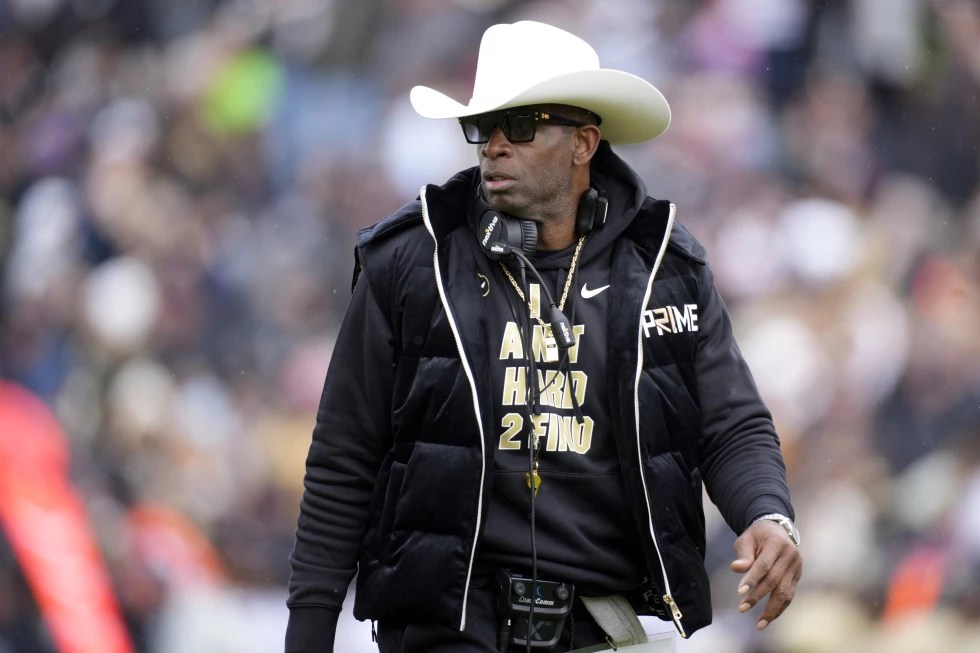
It’s been a busy week in the world of Coach Prime, though if we’re being honest, a) when has it not? and b) isn’t that somewhat by design anyway?

This week’s excitement came in the aftermath of Colorado’s 28-16 loss to UCLA, a game where QB Shedeur Sanders (yes, his son, if you haven’t been following this closely) was sacked 7 times and hit enough other times he had to get an injection of painkillers at halftime. Asked about the state of the offensive line in the post-game press conference, and what he would do to address it, Sanders pere‘s typically colorful response was:

The big picture, you go get new linemen. That’s the picture, and I’m gonna paint it perfectly.

This has set off the latest round of “Coach Prime Is Telling It Like It Is And Holding People Accountable” vs. “Coach Prime Is A Disgrace To College Football” on social media. Everyone’s staking out their positions, but there’s an awful lot of posturing and fairly little clarity.

So let’s start with the facts.

First, the line play was bad. “Defense will stipulate”, as the cop shows say. In fact, it’s been bad for most of the season. One of my first-draft points was “how can he run down his line publicly without looking at the game tape first?” but this isn’t the first time this has been an issue, only the most dramatic example. So we’ll let that one slide on by.

There has been some confusion on how many of the players were new transfers vs. how many were holdovers from the previous 1-11 2022 team. I’ve seen detractors dunking on Sanders’ inability to recruit linemen AND supporters claiming that the entire line were holdovers from the previous regime, and the truth is in the middle. Just for factual clarity, it appears there are two returning starters — center Van Wells and left tackle Gerad Christian-Lichtenhan — and the other three starters are part of Deion’s “luggage”. (As are almost all of the reserves.)

So with the facts somewhat established, let’s wander into the forbidden forest of hot takes and opinions. As with a lot of what Sanders has done in his Colorado tenure, I think it’s not so much the message being conveyed as much as it is how he chose to convey it.

First, it’s simply a question of internal vs. external… keep that shit in-house. If you want to tell your players they should be looking for new gigs next year, save it for practice when the cameras are gone. I guarantee Sanders won’t be the first or last coach to have threatened a kid’s spot on the team; but he’s the first I can remember to threaten about 10 of them to a room full of reporters. When you’re sitting in front of a room full of hot mics, a leader protects his people. YES, you can say the line didn’t play well — no sense denying an apparent truth — but you don’t offer up the kids on the o-line as red meat to protect your bruised ego. Feed ’em some platitudes about looking at the film and seeing where we can improve, and get onto the next question.

And OK, I feel like the perception of nepotism has to chafe a little, when mere sentences before, he praised his son Shedeur as “the best quarterback in the country”. And when there was no talk of getting new defensive backs in regard to his other son Shilo getting ejected for targeting after putting his helmet into the chin of a UCLA receiver. At some point it’s gotta get old being told you’re one of 73 Ringos backing up John and Paul.

(OK… maybe Shedeur and Travis Hunter are Lennon-McCartney and Shilo is George Harrison in this analogy. We’ll keep workshopping it.)

But there’s a bigger and arguably more more worrisome issue underlying his comments. It feels like on some level Sanders is abdicating the responsibility to actually COACH the players under his charge. The man has created this image of “Coach Prime”, but apparently, if you don’t protect his kid and make him look good, he’ll just get rid of you and go out and get a new batch of mercenaries to take your place. Which… lest we forget… was the same message he delivered to the players already in the program when he took over, so it’s not like this is a departure for him. Meanwhile, the line’s been bad for weeks; what has Coach Prime done about it other than threaten to kick them out of the program? Maybe he should rebrand as “GM Prime”: he recruits and assembles the roster, and then someone else does the actual work of making his players better.

And this gets into the larger question that goes well beyond Deion Sanders… it’s NIL, it’s the portal, it’s conference realignment…. Where is the ever-shifting balance between “this has become an ‘amateur’ league in name only, and results are all that matter” and “this is still ultimately a developmental league where helping the players improve their skills is still part of what’s being offered”. If this is just NFL Lite, then OK, bring in a new class of free agents and try again, but at that point let’s stop pretending that the NCAA offers anything a professional minor league couldn’t offer equally well if funded adequately. If we’re going to keep propping up the cause of student athletics as the NCAA’s raison d’etre, than I think coaches should have an obligation to stick with the guys they bring in and try to make them better, rather than better-deal them the second adversity — or the UCLA front seven — hits.